In medical terms there is no conclusive diagnostic test for alopecia areata. Scientists are not sure whether alopecia is a single disorder or a set of related but different disorders. A medical diagnosis usually proceeds by the doctor identifying a set of symptoms that constitute a specific disorder, for which there is (hopefully) are known and effective hair loss treatments. Unfortunately, alopecia does not fit this pattern, so doctors are faced with a very difficult task. There are a number of different causes of alopecia, and so while the main symptom - hair loss - is universal, different causes may require different treatments.
Your dermatologist will attempt to work out whether you have alopecia by eliminating other possibilities and by examining the lesion. Alopecia appears at different rates for different people, and has a greater or lesser effect - i.e. it might only be a small patch on the scalp, or it might cover the whole body. A typical case (though bearing in mind that nothing is 'typical' - which is why alopecia is so difficult to diagnose) might involve a bald patch appearing in a 24-hour period. This is usually (but not always) on the scalp. A dermatologist might try a hair pull test at the margins of the affected area. If your hair comes out easily, that indicates alopecia, and it is likely you will experience further hair loss.
Hair fiber taken from this point can be sent for analysis. Observing the hair under an electron microscope will show that the hair is unusual. The part of the hair furthest from the scalp (the older part) looks normal, but the shape becomes irregular nearer to the scalp. This includes deposits of keratin (the protein that makes up the hair), and also constrictions in the fiber of the hair. There are often cracks along the hair. The difference from a normal hair lies not in the amount of keratin present, but in the way it is assembled.
These hair fibers can have weak spots that lead to breakage. Sometimes the stump of the hair looks like an exclamation mark. This is very distinctive in alopecia, and the dermatologist might look for this as one of the signs of alopecia - noting, of course, that such hair can appear in other conditions as well!
A further sign of alopecia is problems with fingernails. It is difficult to work out how many people have this problem, and it does not always occur at the same time as the onset of alopecia, but somewhere between 10 per cent and 30 per cent of people with alopecia have such a problem - it depends which reports you read! Nails may become pitted, their growth may be affected, or they may be very soft.
Another diagnostic technique used by dermatologists involves carrying out a skin biopsy. This involves taking a small piece of skin (about 4 mm in diameter) and examining it under the microscope. The dermatologist can then see whether there is focal inflammation of the hair follicles, which is one of the clearest signs of alopecia.
There is a possibility that this could be done using blood samples instead, but as yet there is no accepted technique for doing so.
Finding the best hair loss treatment [http://www.hairlosstreatmentsguide.org] starts with understanding the main hair loss causes [http://www.hairlosstreatmentsguide.org/alopecia-areata-and-hair-loss-causes/] and why it has affected you. From there you will be in a far better position to start regrowing your hair again.
Article Source: [http://EzineArticles.com/?Diagnosis-Of-Alopecia-Areata---What-The-Dermatologist-Might-Tell-You&id=6406687] Diagnosis Of Alopecia Areata - What The Dermatologist Might Tell You

Showing posts with label Alopecia - Causes. Show all posts
Showing posts with label Alopecia - Causes. Show all posts
Monday, August 1, 2016

Tuesday, July 26, 2016
How To Treat Alopecia?
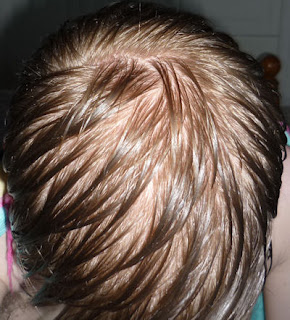
Congenital alopecia, or hair loss, is relatively rare. It is characterized by full absence or drastic thinning of hair that can be combined with other disorders such as deterioration of nails,teeth, etc. Premature, or presenile, alopecia occurs most often among young and middle-aged men and develops gradually. In case with women it is generally limited to hair thinning. Hair loss begins in frontal and parietal areas. Then process grasps other sites of the scalp. The head-skin on the bald sites becomes thin, smooth and brilliant, and apertures of hair follicles are imperceptible.
Seborrheic alopecia, as the name prompts, develops on the background of seborrhea. It is marked with abnormal sebaceous excretions and thinning of hair on the whole surface of the scalp, its peeling, and increased greasiness of hair.
Cicatricial alopecia presupposes constant destruction of hair follicles and their replacement by connecting tissue. Cicatrices usually are not so visible as in case of healing wounds. They result in disappearance of apertures of hair follicles and the scalp becomes smooth and brilliant. The skin can remain soft and elastic though sometimes there may be callosities.
Areal alopecia, or alopecia areata, is characterized by loss of hair in one or several small sites on the scalp, underarms, on the pubis, beard, eyelashes or eyebrowes. Such hair loss areas have more often round outlines, they can increase and merge among themselves, forming larger sites. The skin in the new-forming centers is slightly hyperemic and edematic. Later on it becomes smooth and gets the color of ivory.
Disease can proceed on the background of eosinophilia, lymphocytosis, regional lymphadenitis, thinning of nails, accompanied by headaches. In some cases total loss of hair on the head, and also loss of eyelashes, eyebrowes, and lanugo (malignant, or universal alopecia) is marked. Hair can drop out during several years. Hair loss process can differ in intensity and duration. Sometimes children can have alopecia by way of small-focal "gleams" of hair or the coiled nimbus extending ribbonly from the nape to the auricles.
Most often therapy of premature alopecia consists in intensive bracing treatment. It can't result in restoration of all lost hair on the scalp, but it can reduce appreciablly the process of hair loss. Now techniques of operative treatment of hair loss, or alopecia, are developed. For example, hair transplantation in bald spots. This operation is carried out in specialized clinics and is rather expensive.
Hair losing women with hyperandrogenism are usually treated to eliminate the causes of the latter. In case of increased sensitivity to androgenes (male hormones) the nonspecific therapy that reduces their production by ovaries or blocks their peripheral effects is carried out. With this purpose oral contraceptives and spironolactone are applied.
Treatment symptomatic alopecia should be directed on the basic disease. In case of favorable outcome hair are restored and regrown in due course.
Treatment of seborrheic alopecia should be preventive. In these purposes besides bracing therapies and correction of metabolic processes intensive topical treatment is used. Complex treatment can warn or suspend loss of hair. Such therapy is carried out by dermatologists and cosmeticians.
In case of alopecia areata, or areal hair loss, treatment is generally out-patient or it can be carried out in dermatological hospital (when hair loss process is extensive and prolonged). Vitamins A, E, C, H are used, as well as nicotinic, pantothenic and folic acids. Also doctors resort to preparations of furocoumarin, sedatives means, ACTH (drenocorticotropic hormones) and glucocorticoids in such cases. The latter are also used exteriorly as ointments. Rosental paste, alcoholic and etheric solutions with addition of sulfur, salicylic acid, tincture of siliculose pepper are applied. Also irradiation by UV-beams or photochemotherapy is sometimes used in course of therapy. Among physiotherapeutic means used in alopecia treatment are d'arsonvalization, cryotherapy with snow of carbonic acid, cryomassage and massage with electrobrush.
Devin Greenfield is a connoisseur of natural hair loss treatments who writes for [http://regrow-hair.org]regrow-hair.org where you can learn more about natural hair regrowth. You can also read about the benefits of natural hair loss products and buy them at [http://store.regrow-hair.org/]Natural Hair Loss Treatment Store
Article Source: [http://EzineArticles.com/?How-To-Treat-Alopecia?&id=644458] How To Treat Alopecia?
Monday, July 25, 2016
Helping Hands - baldness Support
When an individual goes through a traumatic or devastating expertise, it helps that there ar folks standing by his/ her facet to share the pain with, to speak with or simply those that are there whose presence will build things additional supportable. regardless of the unhealthy expertise is, it perpetually helps to grasp there's a assistance which will guide one into the trail of sunshine once more. Usually, these folks ar family and shut friends. however in some cases they're support groups; a gaggle of individuals World Health Organization share a typical or similar expertise World Health Organization grasp precisely what it appears like to be honeycombed during a specific scenario. they will facilitate one another upset the changes by merely sharing concerning their expertise. this is often the aim of baldness Support, to encourage patients to speak concerning the disorder, the changes they're going through in order that they will facilitate one another in assuaging the emotional and psychological weight of affected by a condition known as baldness.
Alopecia support has 3 main goals and people ar to support, empower and encourage baldness sufferers. One notable effort is Charlie's Angels that is that the collaboration between NAAF (National alopecia Foundation) and its voice, Charlie Villanueva. Charlie Villanueva is associate NBA player for the metropolis greenbacks. He himself has been diagnosed of associate reaction skin disorder that caused him to lose hair in his scalp and different components of his body. he's one in all the five million North Americans affected by a condition known as alopecia at the age of 10. His condition has developed to a additional advanced disorder known as baldness Universalis. he's currently twenty 3 years previous. Charlie's Angels is a plan and motivation for kids growing up with this disorder. His aim is to indicate these kids that even if they need a condition it shouldn't stop them from reaching their dreams as he has. He needs to indicate that even if one might lose hair, it doesn't essentially mean that one loses his life prior him/ her.
Charlie's Angels conducts Meet and Greet programs that brings along kids affected by the disorder and their families. throughout the 2007-2008 NBA season, Charlie and also the metropolis greenbacks brought native kids and their families to observe their road tour. Showing them that they're not alone which despite their misfortune, like Charlie, they will still build their dreams happen. Aside kind this program tho', Charlie's Angels continues by creating efforts to coach the general public concerning the condition and raises funds to extend support to those baldness kids.
There ar different baldness support programs offered by NAAF and different organization that raises concern and provides all the support they will provide to baldness cases. They serve to bring folks stricken by baldness and their families along to steer hand in hand to battle with the adversity. they bring about inspiration to thousands if not countless lives. They aim to encourage these people to maneuver on with their lives and to bring out the message that losing hair doesn't essentially mean losing one's hopes and dreams.
Alopecia Support [http://www.alopecia.net] may be terribly onerous to search out. albeit you are doing realize some quite support, it is very onerous for those while not baldness to know what you're looking. you'll be able to visit our #1 suggested resource for baldness Support by Clicking Here [http://www.alopecia.net].
Thursday, July 21, 2016
Alopecia - Causes, Symptoms and Treatment
Alopecia areata could be a sort of hair loss from areas of the body, typically from the scalp . as a result of it causes bald spots on the pinnacle, particularly within the initial stages, it's generally referred to as spot hairlessness. alopecia affects each males and females. this kind of hair loss is totally different than male pattern hairlessness, associate familial condition. alopecia is one sort of hair loss. the precise range of individuals stricken by alopecia isn't renowned. Estimates vary between one in one thousand to a pair of in a hundred individuals being affected at some purpose in their life. alopecia will occur at any age however most cases initial develop in teenagers and kids. In concerning half-dozen in ten cases the primary patch of hair loss develops before the age of twenty years. alopecia is random illness. In some individuals, hair grows back however falls out once more later. In others, hair grows back and remains. every case is exclusive. notwithstanding somebody loses all of his or her hair, there's an opportunity that it'll grow back.
Subscribe to:
Posts (Atom)